When Colt introduced a semi-automatic version of the AR-15 to the civilian market in the 1960s, the company faced a basic marketing problem: How do you convince American gun owners that a rifle descended from a military weapon belongs alongside the sporting firearms — those used for hunting and target shooting — that they already own?
At first, the answer was to depict AR-15s alongside hunters, wildlife, and rural landscapes. During the federal assault weapons ban, manufacturers advertised modified “post-ban” versions that complied with the law while preserving much of the underlying platform. But after the ban expired in 2004, the gun industry embraced tactical imagery, military associations, masculinity, and personal defense, capitalizing on the Global War on Terror while simultaneously promoting a new, friendlier name for the category: the “modern sporting rifle.”
Below we explore decades of advertisements and provide a visual history of the gun industry’s efforts to create a civilian market for AR-15s, the weapons of choice for mass shooters.
1960s: SELLING A MILITARY RIFLE TO HUNTERS
One of the earliest advertisements for Colt’s civilian AR-15 did not depict soldiers, SWAT teams, or armed homeowners; it depicted hunting. In a 1963 advertisement in Guns magazine, Colt told prospective buyers, “If you’re a hunter, camper, or collector,” the AR-15 offered a “new hunting adventure.” The company emphasized that the rifle weighed just 6 pounds and placed it within recreational activities already familiar to American gun owners.
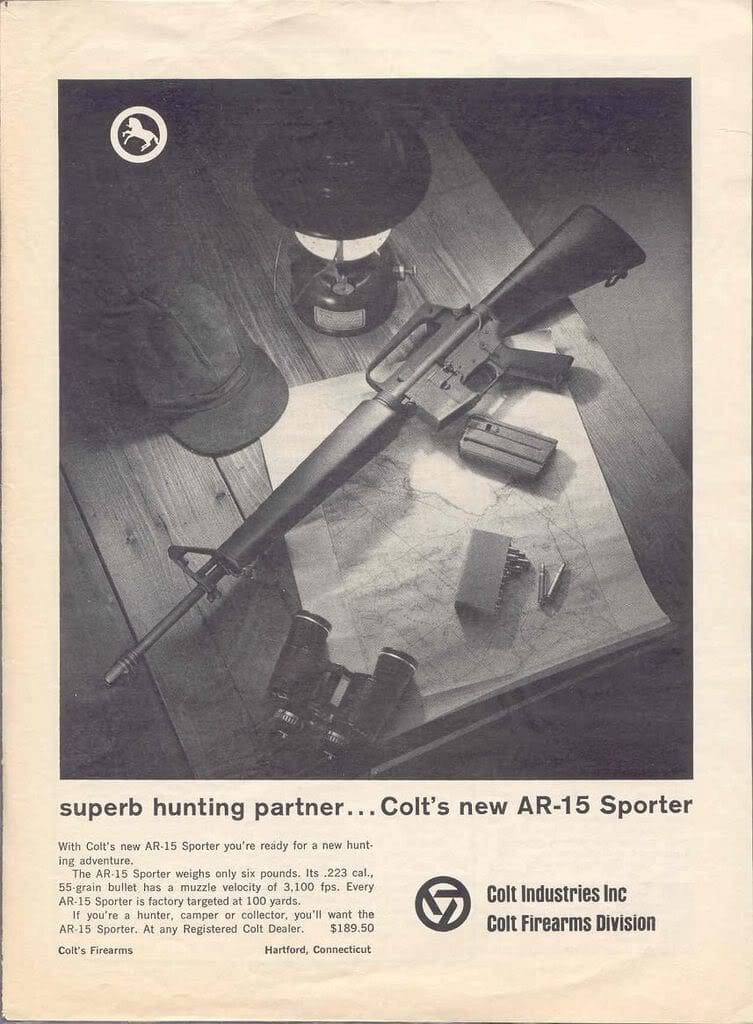
The approach reflected the challenge facing manufacturers at the time: Unlike hunting rifles, the AR-15 was semi-automatic and used detachable magazines — features unnecessary for hunting ethically, which requires killing game as quickly and painlessly as possible with one shot. It also had plastic and aluminum components instead of the wood and steel gun owners were used to.
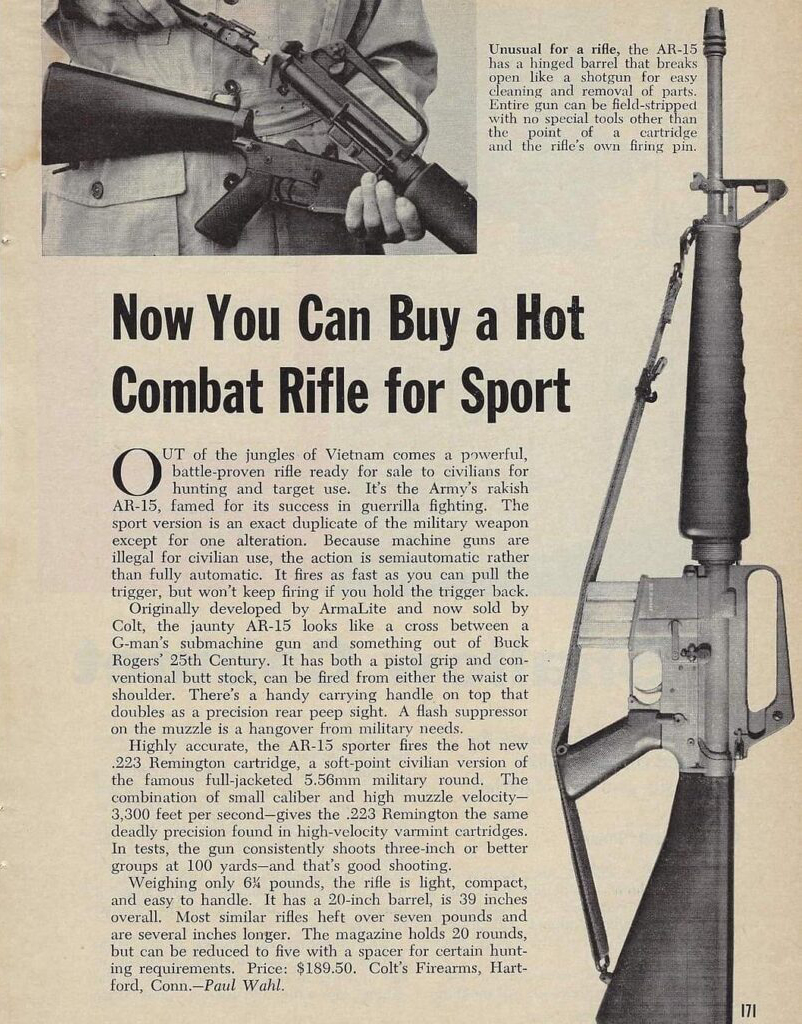
But Colt did not entirely hide the rifle’s military lineage. A 1965 ad called it “an exact duplicate of the military weapon” save for firing semi-automatically (“as fast as you can pull the trigger”), not fully automatically. A 1977 catalog promoted the civilian rifle by telling consumers that it “looks like, feels like, and performs like its military cousin.”1Colt 1977 catalog, https://cdn.shopify.com/s/files/1/2701/9842/files/Colt-1977-Catalog-FINAL.pdf?v=1600464132, at 7. The dichotomy between those two messages — this is a sporting rifle, but it gives you something resembling the military experience — would become increasingly important to AR-15 advertising in the decades that followed.
1980s: THE RISE OF “ASSAULT WEAPON” MARKETING
By the 1980s, Colt’s advertising had broadened the circumstances in which consumers might imagine using an AR-style rifle. One ad from 1985 showed a rancher holding an AR-15 with the headline “Survival means different things to different people.” The ad pitched the rifle as the ideal choice for the “self-sufficient” rancher who wants to protect their sheep as well as the “rugged individual in the wilderness” who is “prepared for any eventuality.” Yet the ad still emphasized that the rifle was a civilian version of the “battle proven and recently improved U.S. military issue M16A1.”
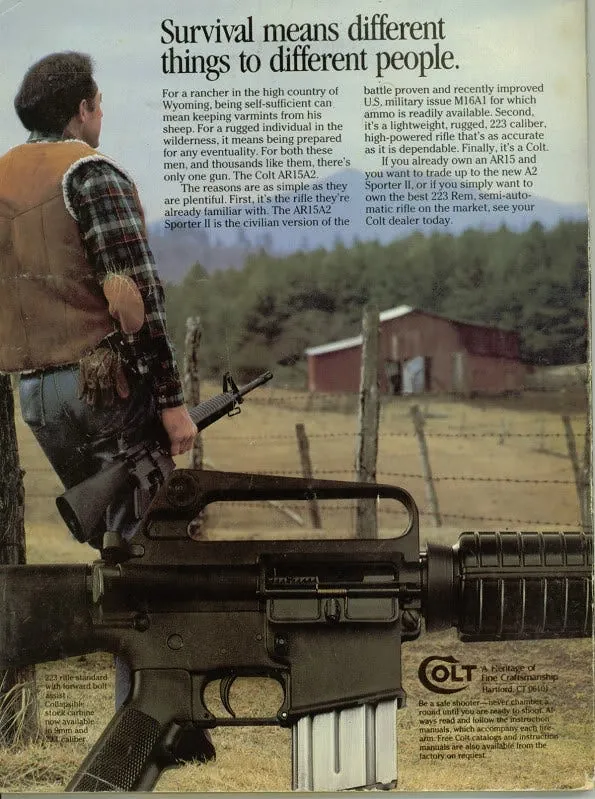
In other words, Colt was still presenting the rifle as both a practical tool and the civilian counterpart of a military firearm.
Gun publications took that approach further in the 1980s, for the first time co-opting the military terms “assault rifle,” “assault firearm,” and “assault weapon” to promote civilian versions for hunting and target shooting. The July 1981 issue of Guns & Ammo marketed the “New Breed of Assault Rifle.” The 1983 Complete Buyer’s Guide to Assault Rifles advertised “Military Firepower & Precision in Sporting Rifles.” Guns & Ammo’s 1984 Assault Firearms described “Assault Rifles From the Armies of the World” as being the “Sporters of Tomorrow,” while the 1986 Gun Digest Book of Assault Weapons promised a “detailed analysis” of “assault-type weapons” for civilian usage.
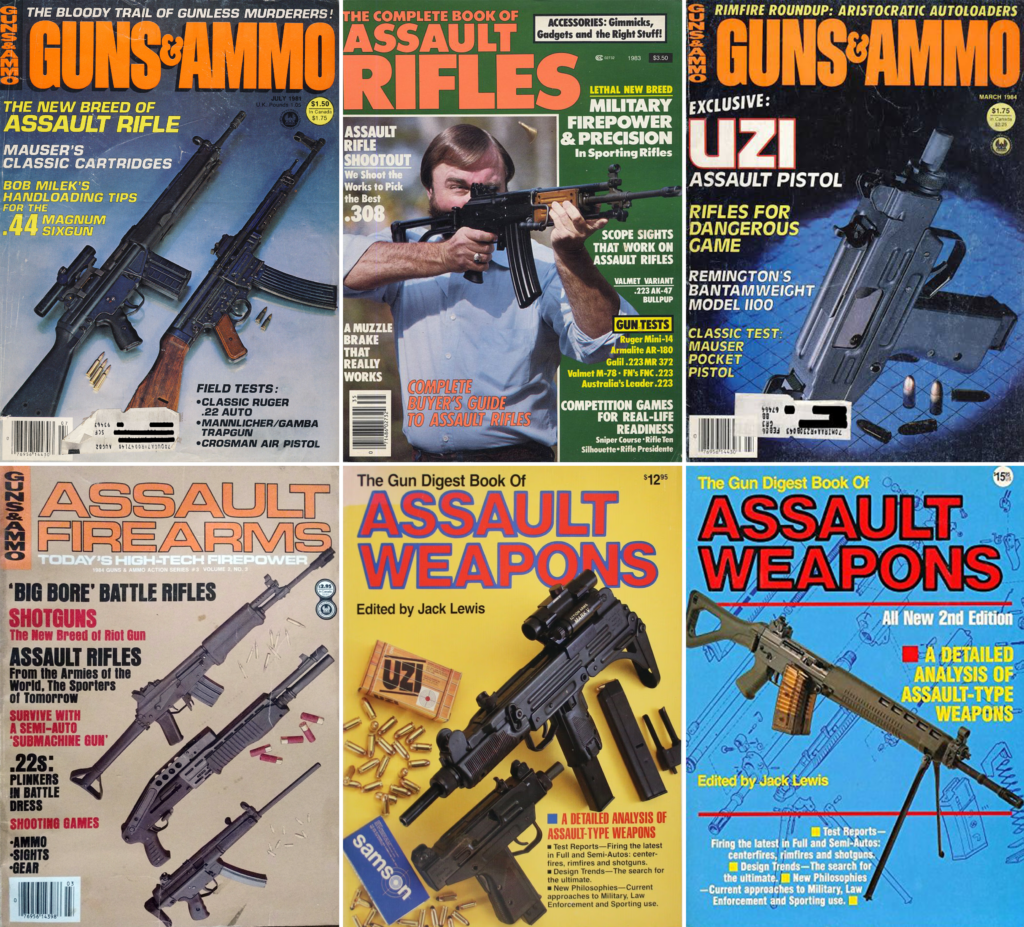
While groups like the National Rifle Association and National Shooting Sports Foundation (NSSF), the gun industry’s trade association, today claim that “anti-gun” legislators created the term “assault weapon” to scare people after such weapons were used in several high-profile shootings, the term was actually introduced by the gun industry itself to attract customers in the 1980s. At the time, the AR-15’s military association was considered a selling point that the industry embraced.
1994 to 2004: The Federal Assault Weapons Ban
The federal assault weapons ban changed the regulatory environment surrounding AR-style rifles without fully eliminating the civilian market for them. The law prohibited several newly manufactured semi-automatic firearms by name as well as those that used detachable magazines and possessed two or more military-style features, such as pistol grips, collapsible stocks, and flash suppressors. The law also prohibited magazines that held over 10 rounds of ammunition.
But the law also grandfathered in the firearms and high-capacity magazines people already lawfully possessed, and to sell new models, manufacturers reconfigured their guns to only have one proscribed feature, which they marketed as “post-ban” models. For example, gun makers Bushmaster and Rock River Arms both advertised “post-ban” AR-15s with fixed stocks, non-threaded barrels, and 10-round magazines for target shooting, varmint hunting, and protection. They also sold “pre-ban” models to law enforcement personnel.2Bushmaster 2003 Catalog, https://www.scribd.com/document/622467006/Bushmaster-2003Catalog.

In other words, the gun industry continued producing and promoting some compliant AR-style rifles during the federal assault weapons ban, and firearms made before the ban remained available under the law’s grandfather provision.
2004 TO 2010s: EXPANDING THE AR-15 MARKET
After Congress allowed the federal assault weapons ban to expire in 2004 — following lobbying from groups like the NRA — the gun industry capitalized on the highly televised wars in Afghanistan and Iraq to emphasize the AR platform’s military-style features and tactical performance while continuing to stress its hunting and target shooting capabilities. Rather than replacing hunting imagery with military imagery, manufacturers often pursued both approaches in an attempt to expand the AR-15’s appeal to different groups of civilian consumers.

In 2009, the NSSF began calling AR-15s and similar weapons “modern sporting rifles” in an attempt to associate them with traditional sporting activities and distance them from the “assault weapon” moniker, even as manufacturers continued highlighting their military origins and tactical uses.
A year later, in 2010, Bushmaster began its “Consider Your Man Card Reissued” ad campaign, directly linking AR-15 ownership to one’s masculinity and overall identity. In addition to print ads, visitors to Bushmaster’s website could take a quiz to gauge their manliness and receive a temporary “Man Card.”


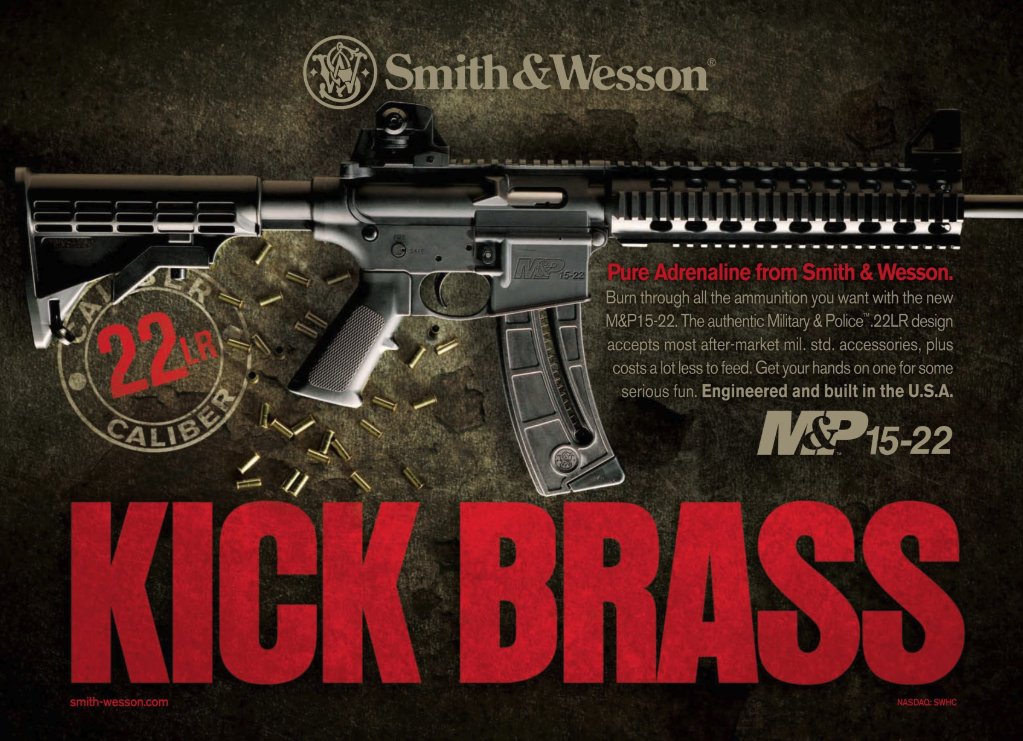
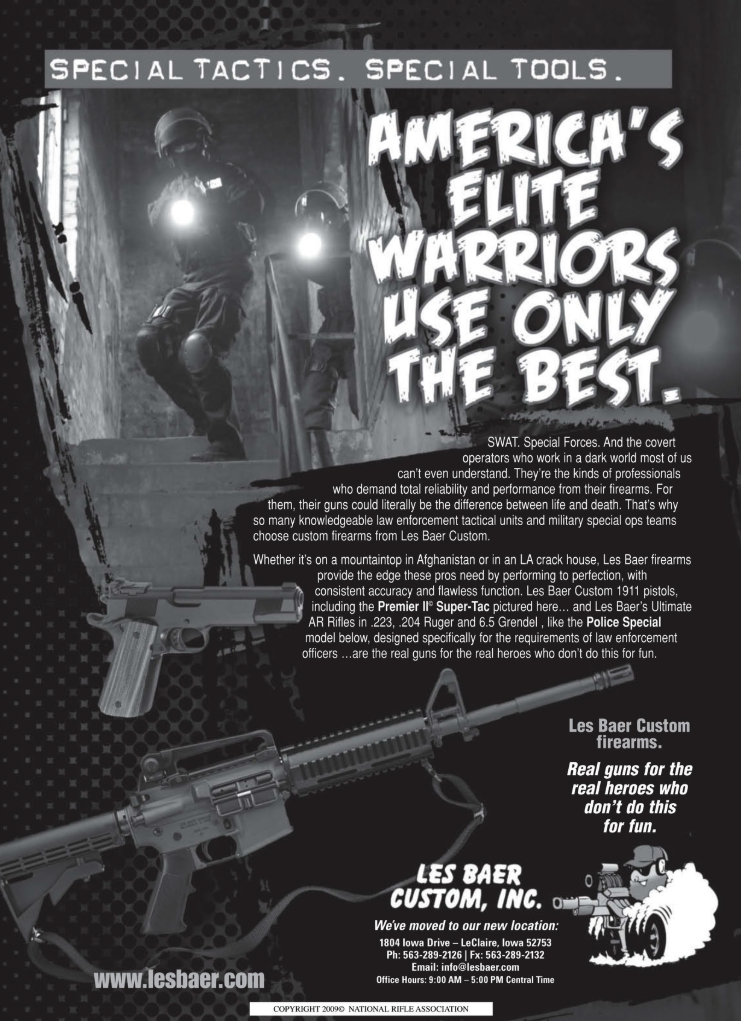
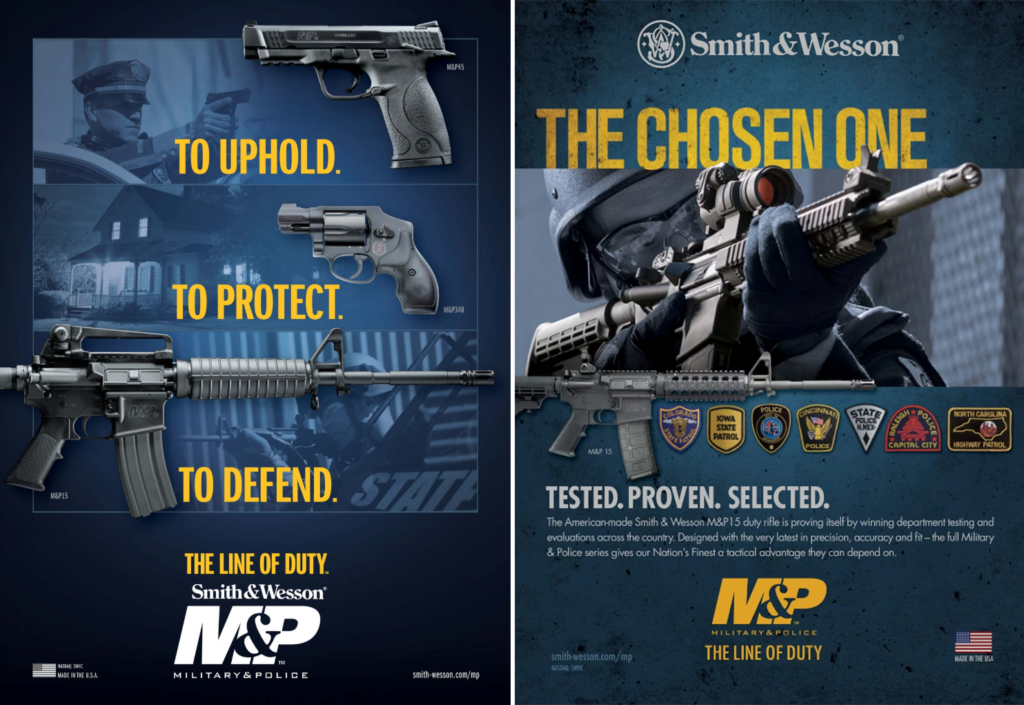
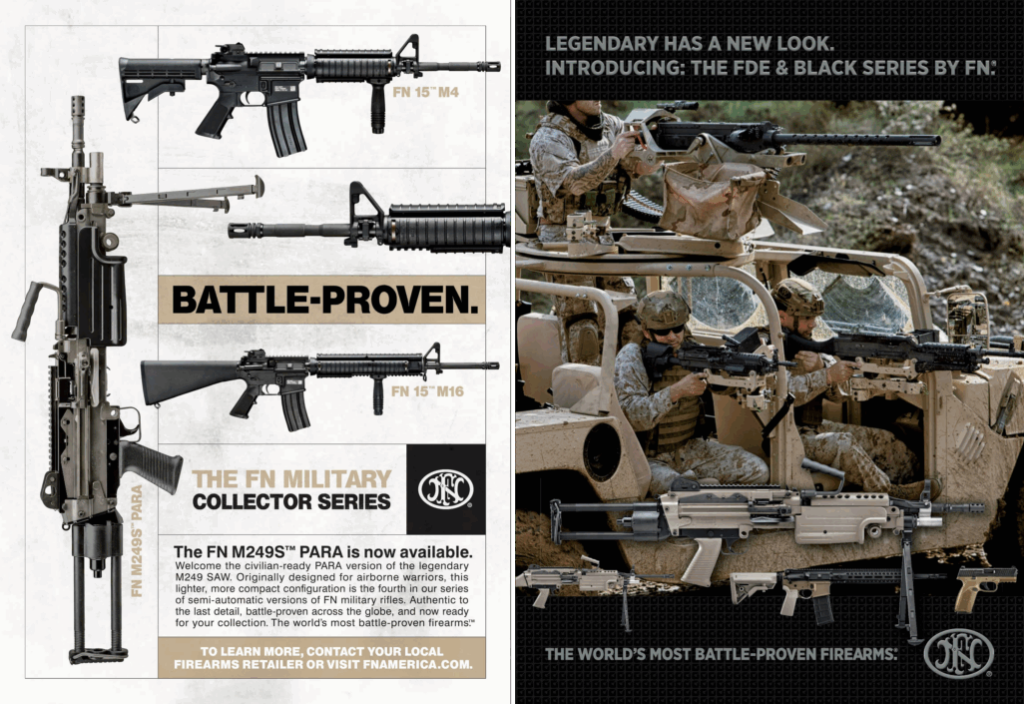
In a December 2011 investor presentation, Smith & Wesson explicitly identified the “Halo Effect from Professional Markets” — associating products with the U.S. military and police to build their legitimacy for civilians — as a “growth driver.” (In a 2011 investor filing, Smith & Wesson also stated that the “modern sporting rifle” market was worth an estimated $459 million.) Fabrique Nationale (FN) took this strategy further in 2015 with its “Military Collector” M4 and M16 rifles for civilian sales.
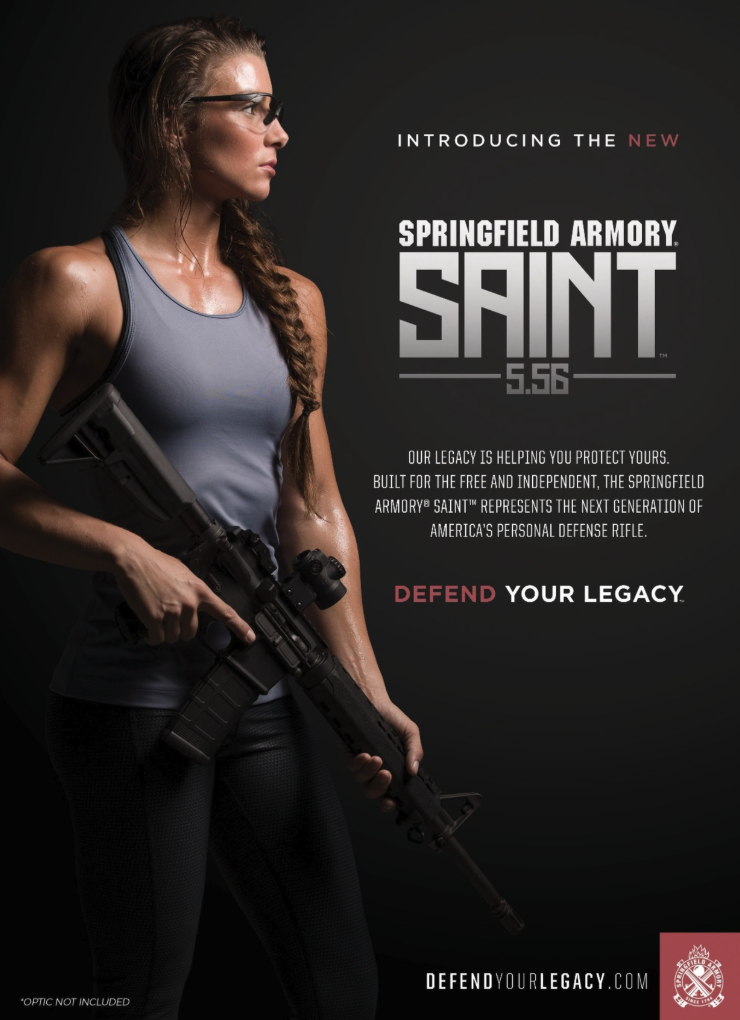
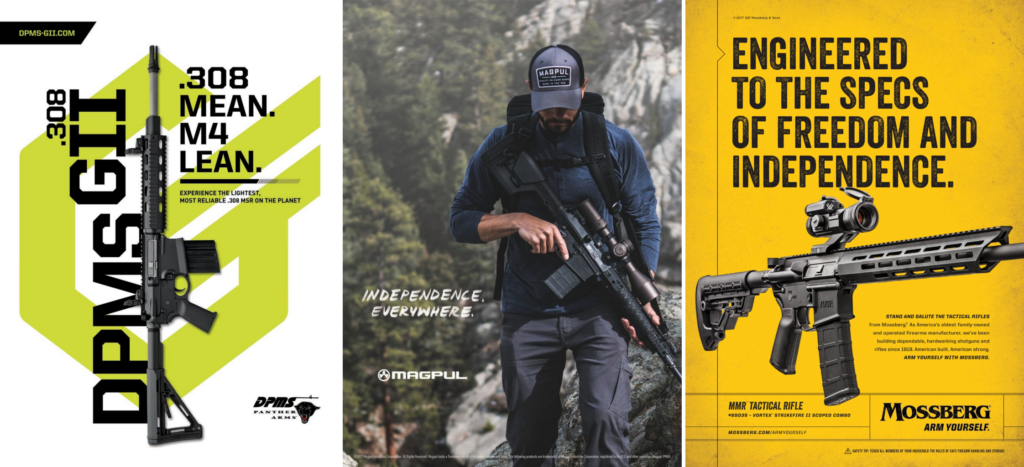
By the late 2010s, the industry’s print advertising reflected a flexible approach to selling AR-style rifles. Manufacturers emphasized tactical performance, military heritage, hunting applications, patriotism, or outdoor recreation depending on the intended audience. Advertisements from DPMS, Magpul, and Mossberg in the same 2017 issue of American Rifleman illustrate how these messages coexisted, presenting ARs as everything from tactical firearms to symbols of “freedom and independence.”
2010s TO TODAY: THE SOCIAL MEDIA ERA
By the early 2010s, social media platforms offered gun manufacturers something that magazine advertising never could: direct, continuous access to consumers. Companies no longer needed to wait for the next issue of a gun publication to present a new product. Instead, they could post photos, videos, promotions, jokes, political messages, and product announcements throughout the week, while followers could immediately like, comment on, and redistribute that material.
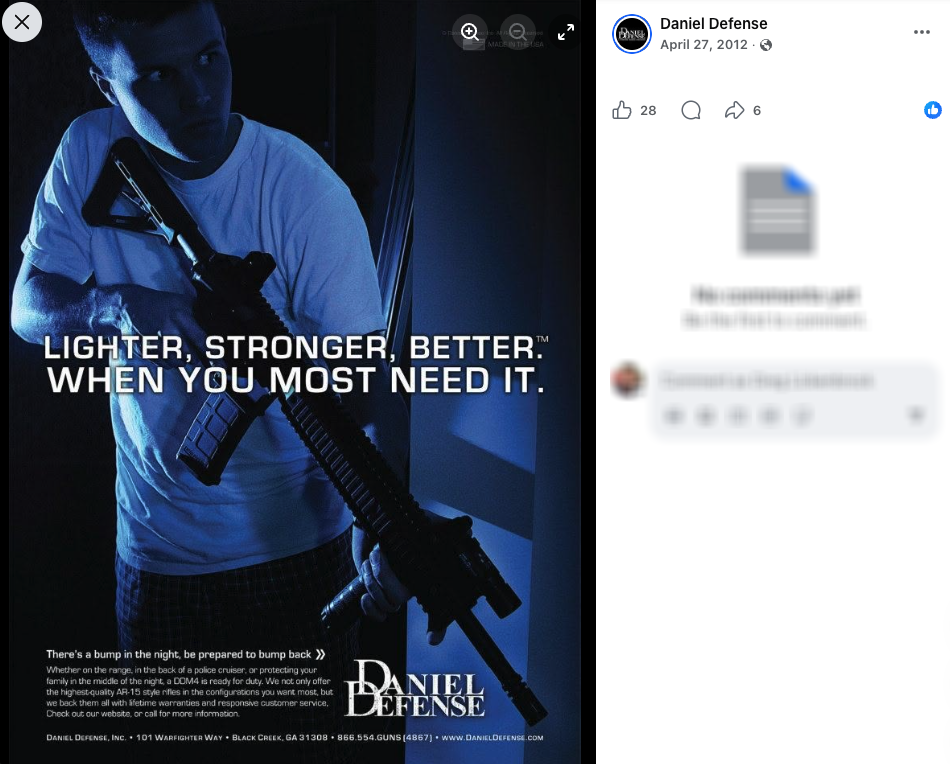
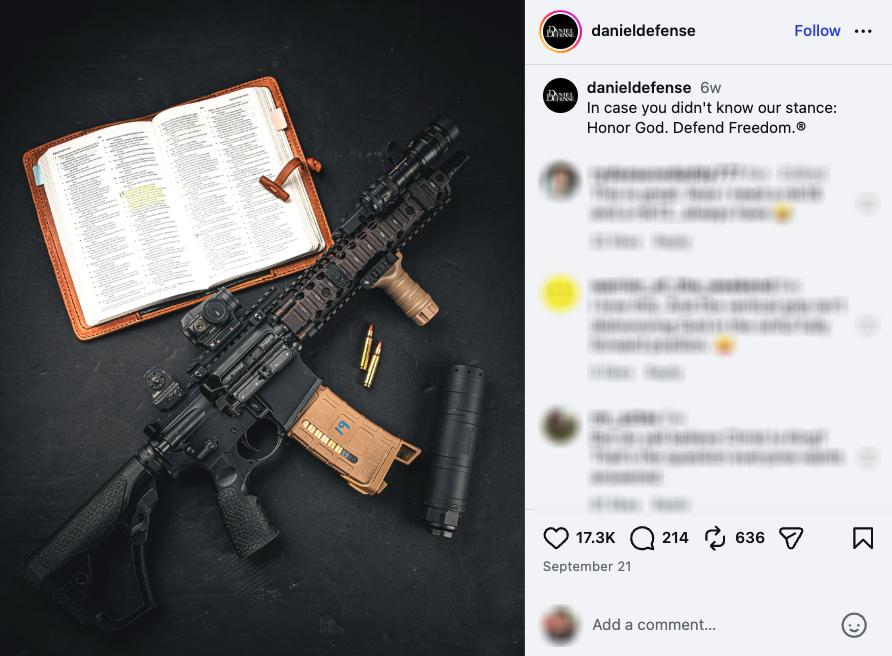
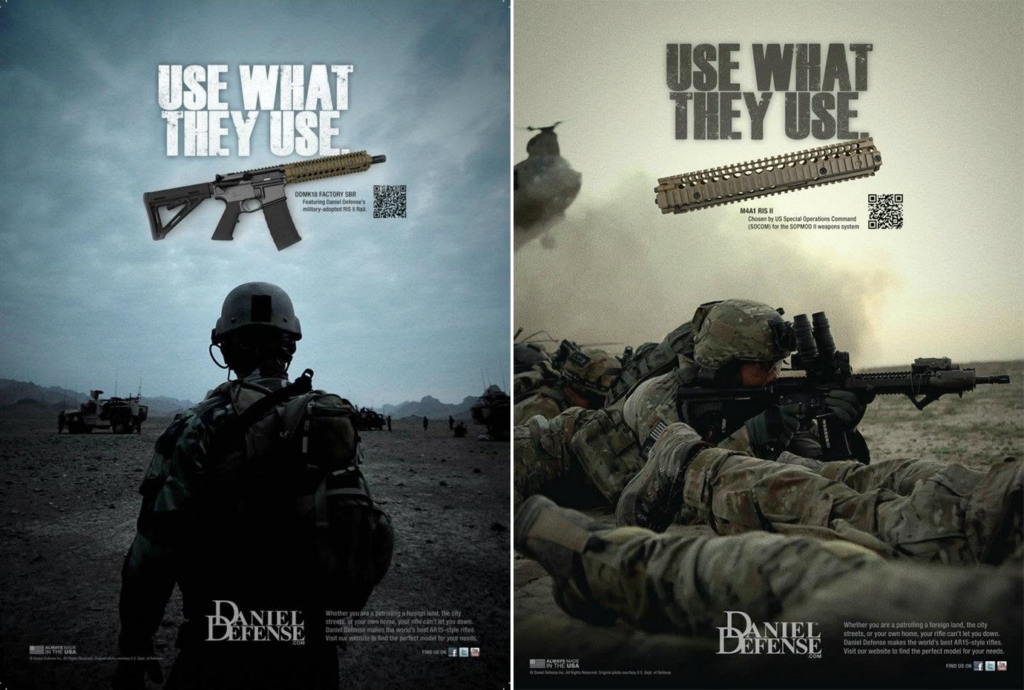
Daniel Defense’s social media marketing provides an especially clear example of how traditional AR-15 advertising adapted to this environment. In 2012, the company simply posted many of its print ads on Facebook, including those that promised civilians could carry rifles like soldiers and “USE WHAT THEY USE,” despite the fact that Daniel Defense does not manufacture complete rifles for the U.S. military.
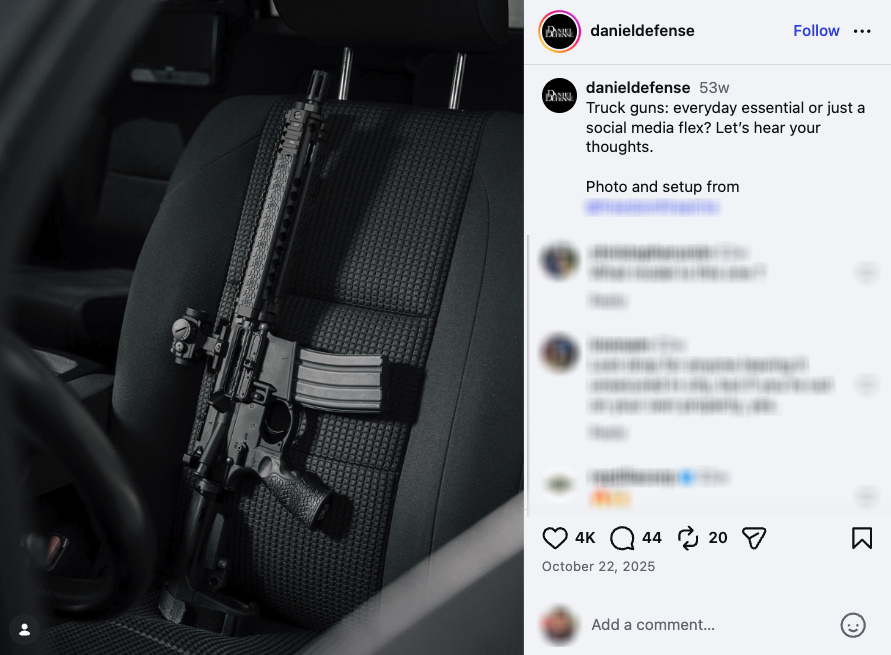
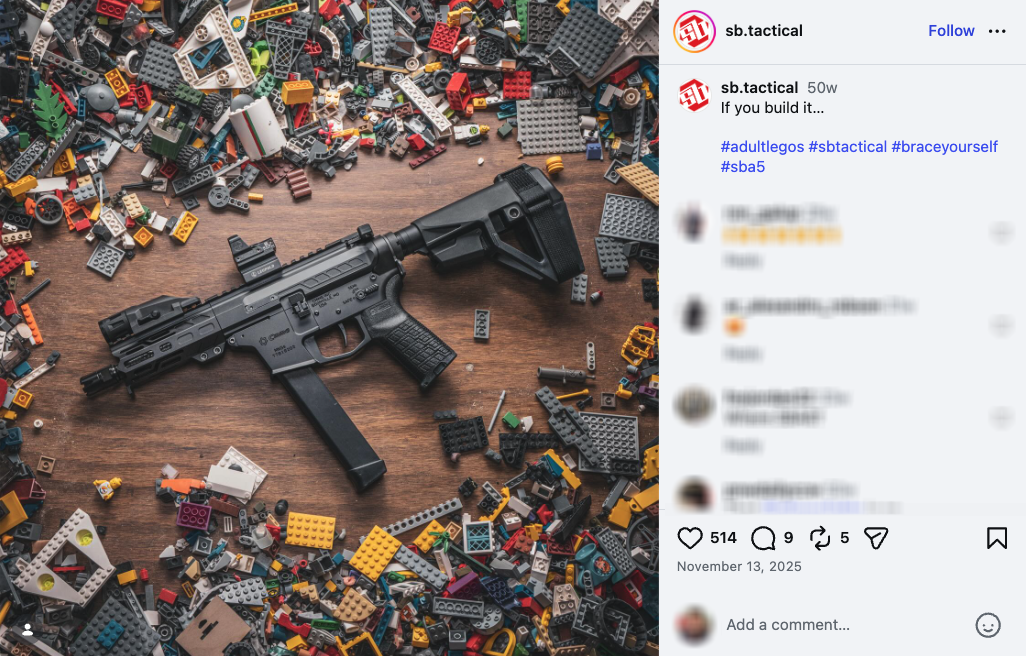
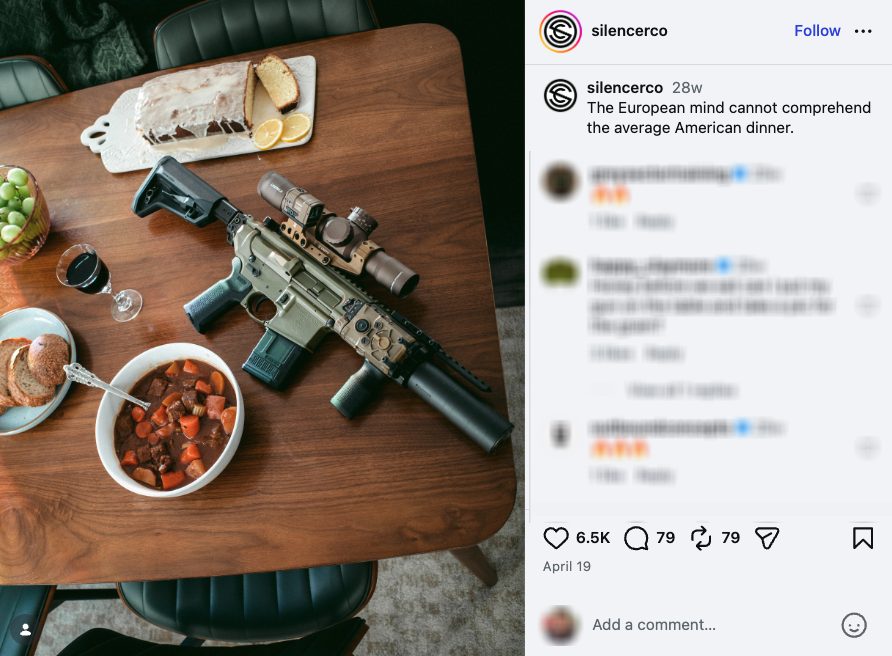
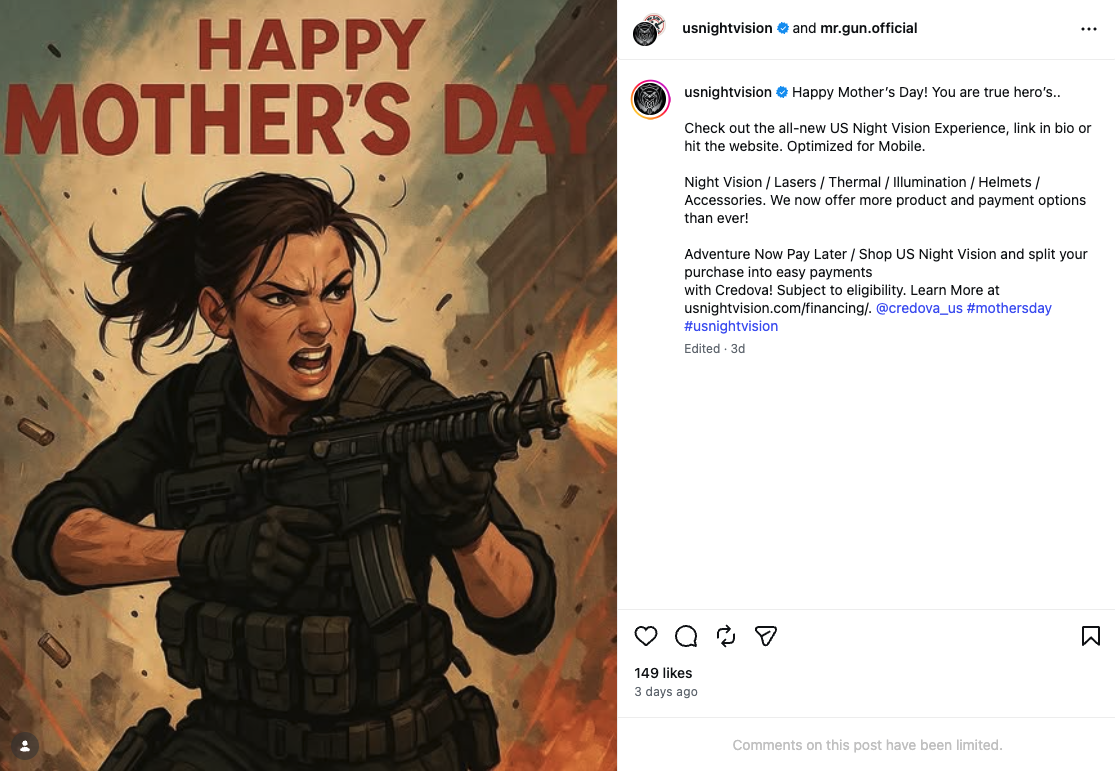
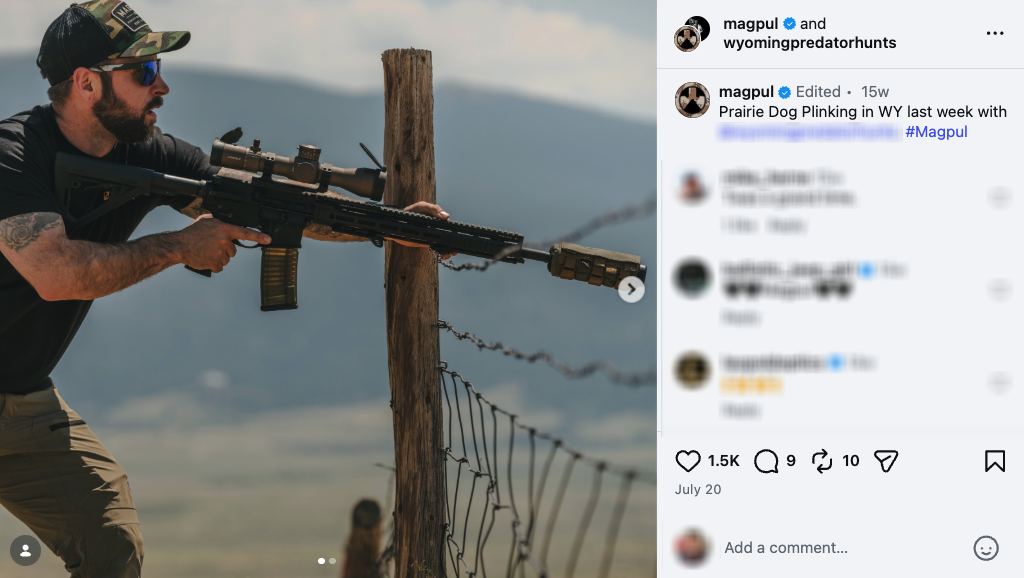
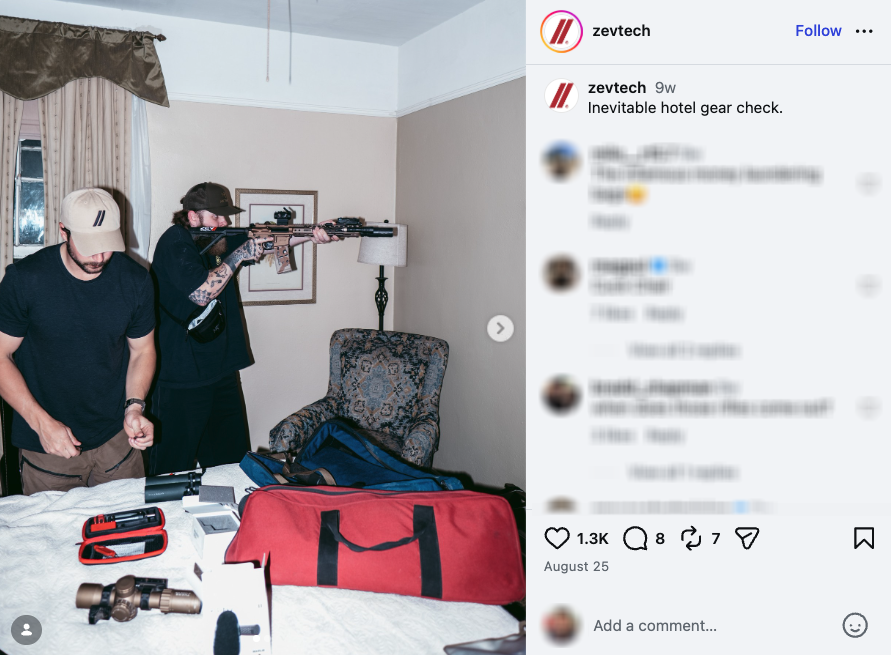
Over time, gun makers began filling their Facebook and Instagram profiles with photos and videos showing AR-15s at shooting ranges, in hunting camps, beside tactical equipment, inside vehicles, alongside American flags, and in the hands of military personnel, celebrities, influencers, and ordinary customers. The companies showcase endless AR-15 configurations while encouraging users to show off their own rifles, blurring the line between commercial marketing and enthusiast content. In this world, AR-15 ownership is its own identity.
For example, more recent Daniel Defense Instagram posts show unsecured AR-15s in ordinary domestic settings, presenting them as everyday items. Neither of the examples below resembles a traditional advertisement centered on technical specifications, hunting applications, or professional military use.
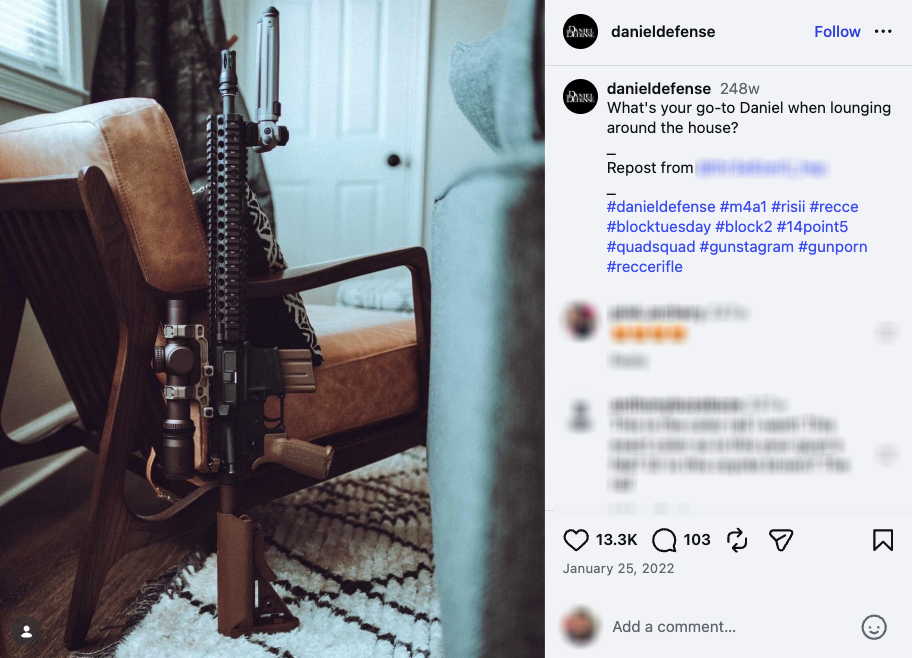
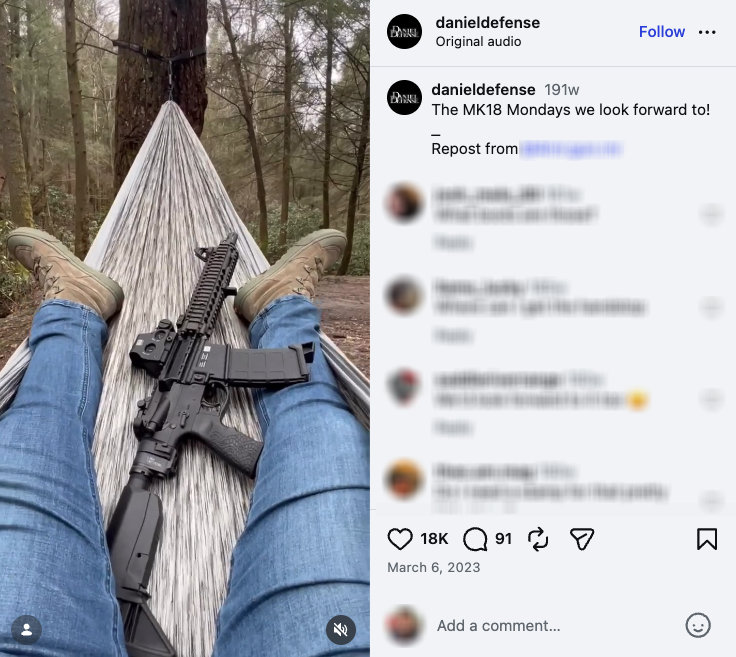
With both examples, Daniel Defense simply shared other users’ content, inviting others to comment, share, and post their own content. The living room post also has hashtags like “#gunstagram” and “#gunporn,” connecting it to larger online communities built around firearms.
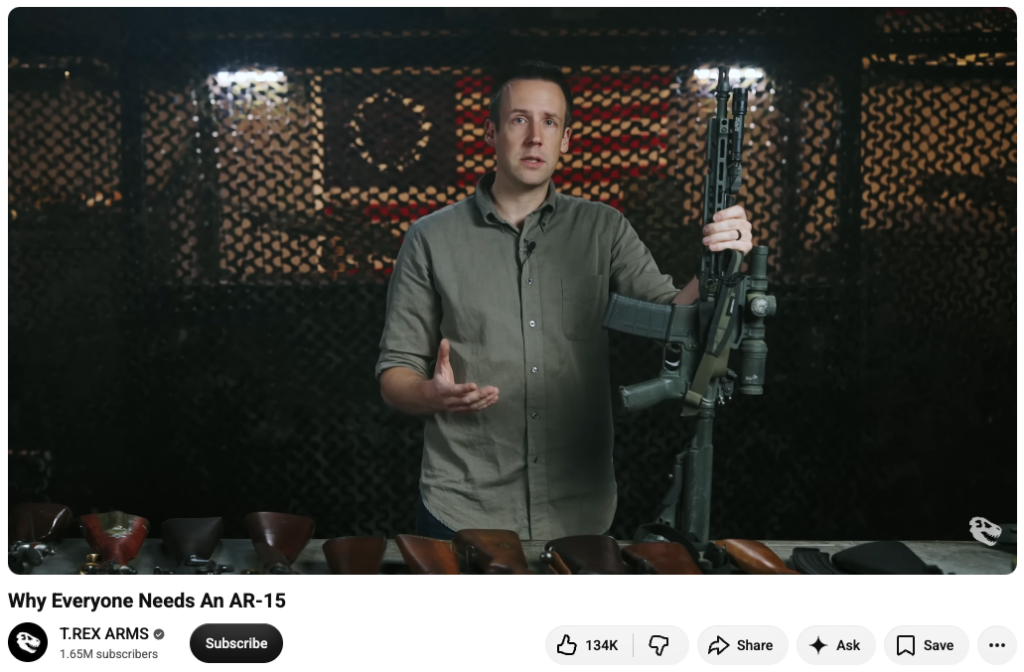
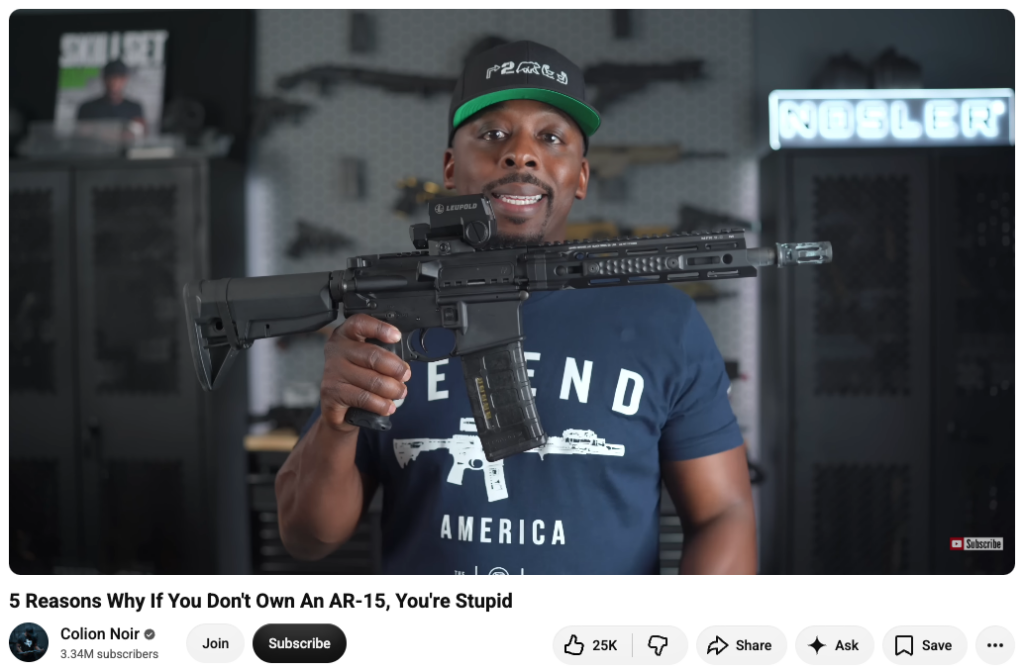
On YouTube, gun-focused content creators — known as “guntubers” — review, test, and demonstrate AR-style rifles and accessories, often introducing them to viewers without disclosing their gun industry sponsors. Gun content on YouTube has accumulated more than 29 billion views, with dozens of channels attracting a million or more subscribers. Here, gun makers promote their products through personalities who have cultivated loyal audiences, and the financial impact is substantial. According to researchers, social media influencers drove between 1 million and 1.5 million firearm sales in 2025, representing as much as $825 million in retail revenue.
Recruiting the Next Generation
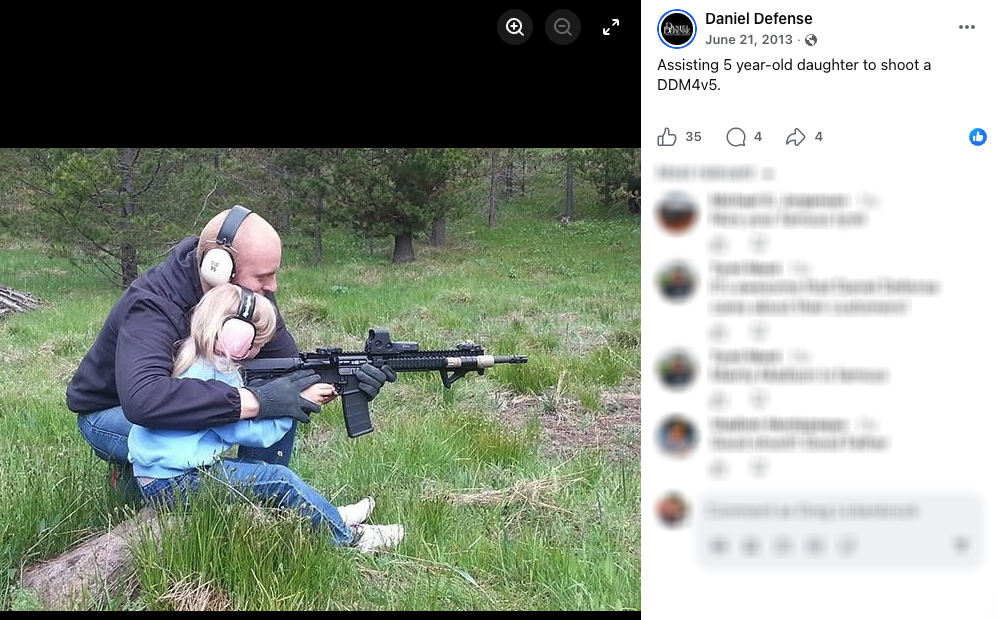
The gun industry has long framed gun ownership as a tradition passed down from parent to child as a way to recruit the next generation of gun owners, and gun makers have used social media to market AR-15s as heirlooms and rites of passage.
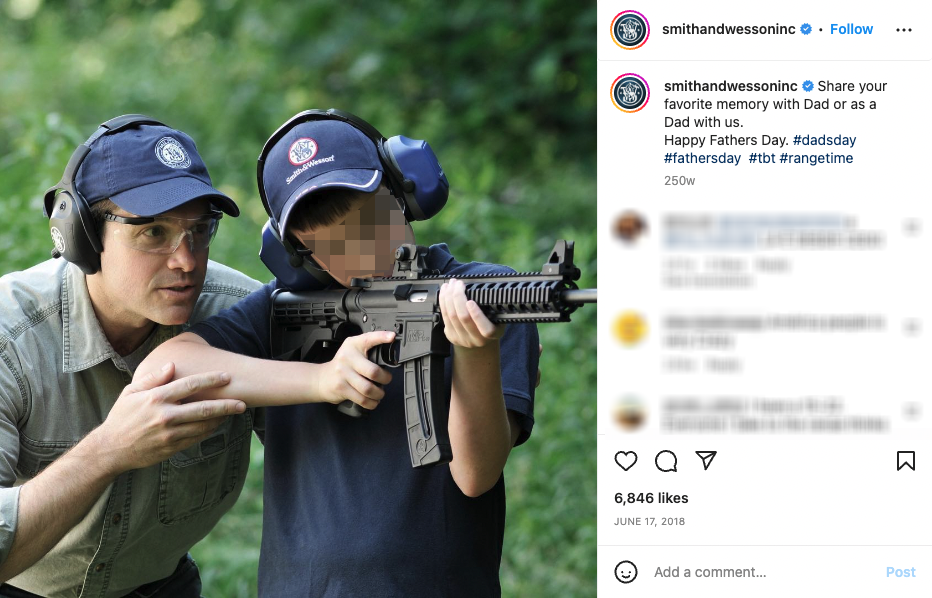
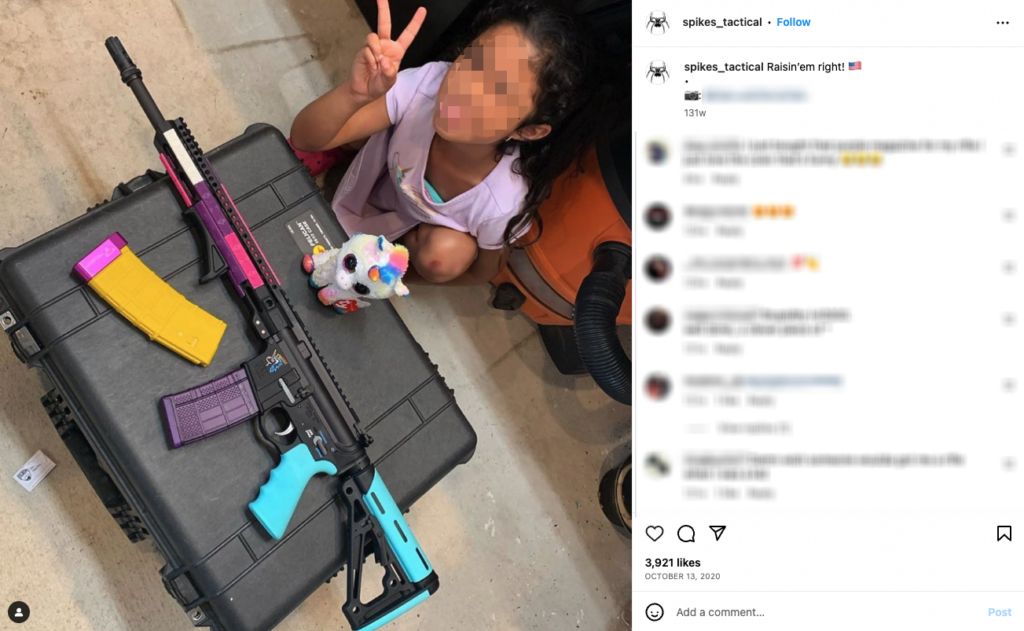
Gun makers also attempt to reach younger audiences by referencing movies, TV shows, video games, and memes in their posts, placing their firearms within familiar cultural references.


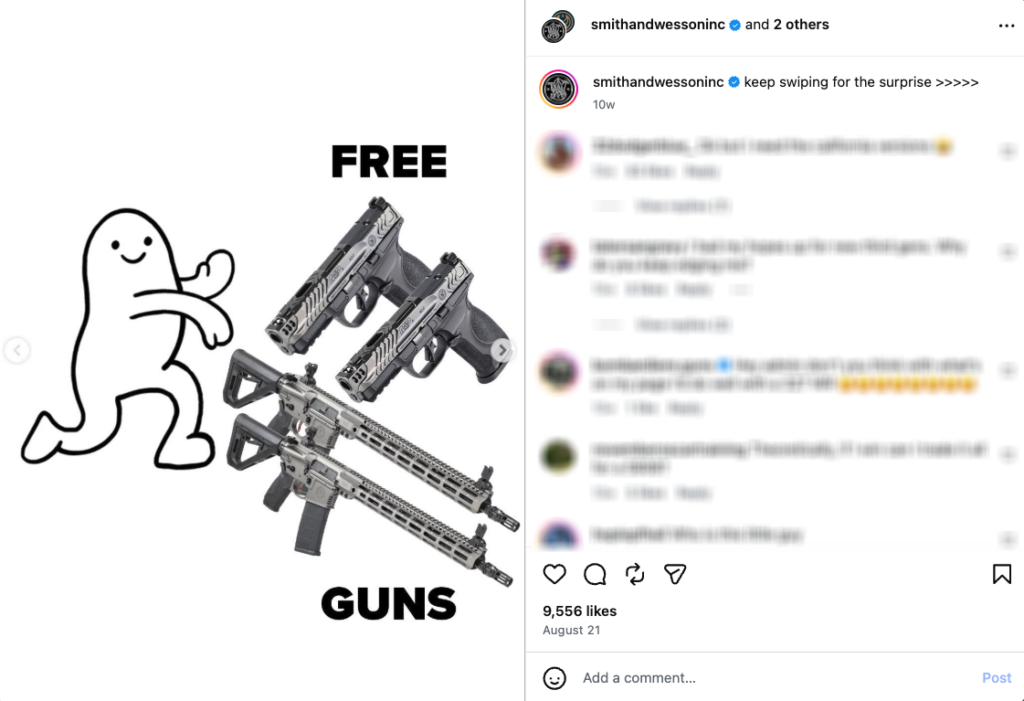
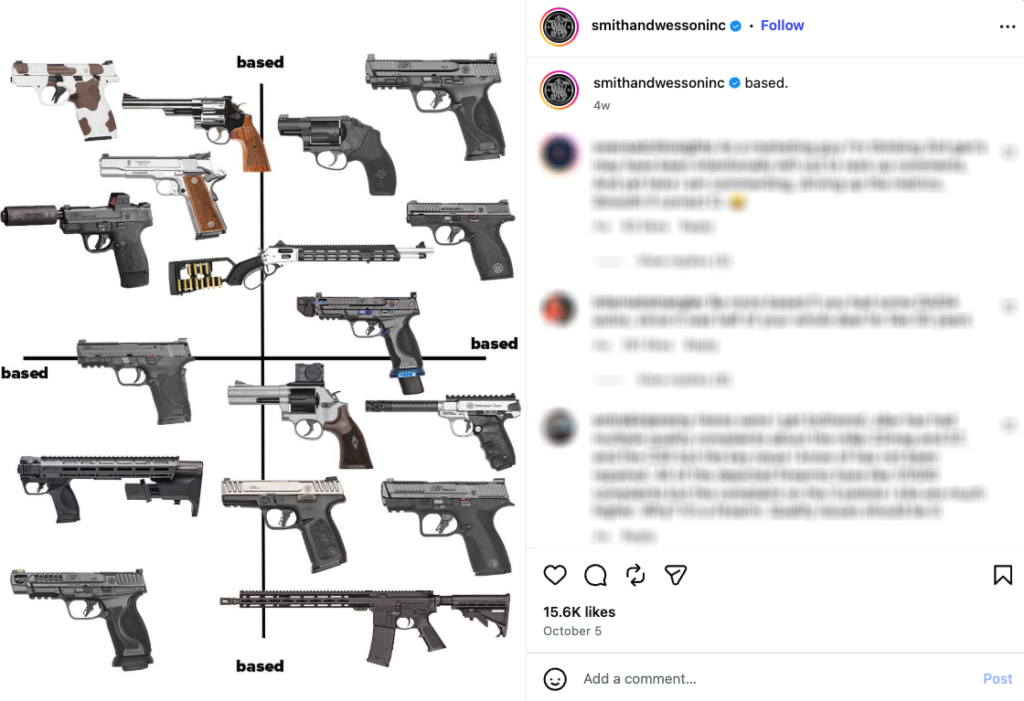
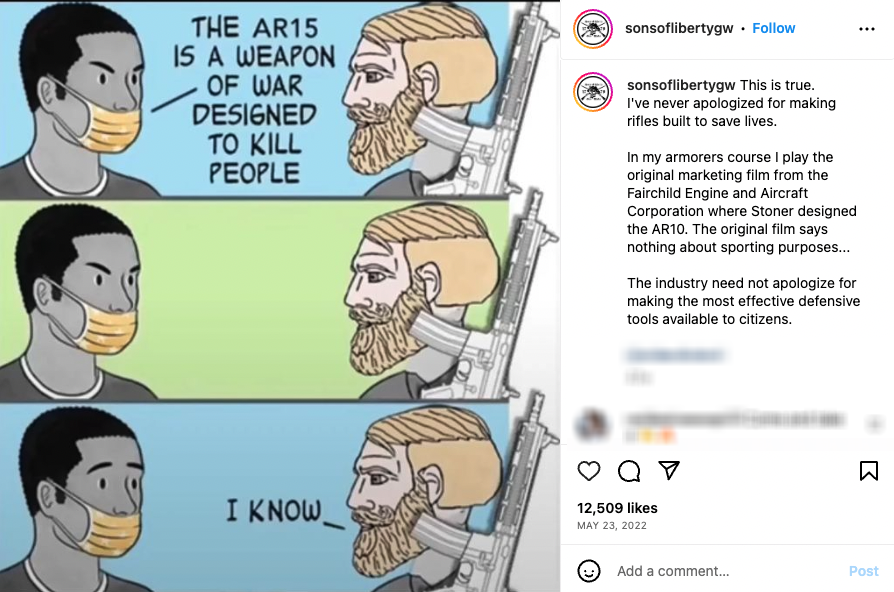
Other companies have embraced meme culture. For example, Smith & Wesson’s Instagram account regularly incorporates viral trends, slang, and absurdist humor into posts featuring its firearms, often with little resemblance to traditional advertising. In a recent post, the company uses a dancing cartoon figure to advertise “FREE GUNS,” including AR-15s, as part of a raffle. In another, Smith & Wesson called all of its guns “based” on a graph.
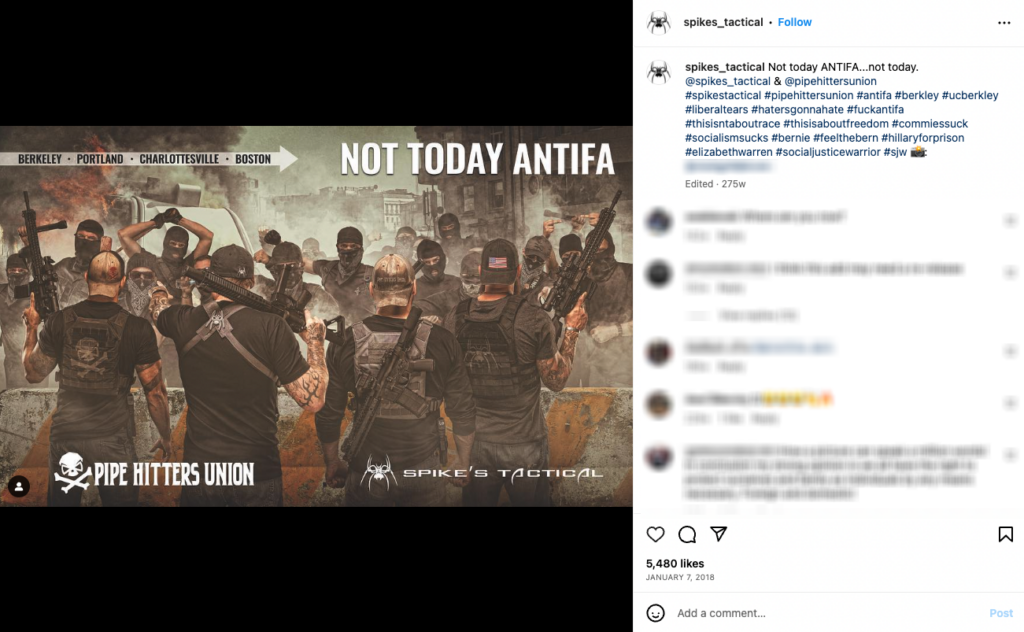
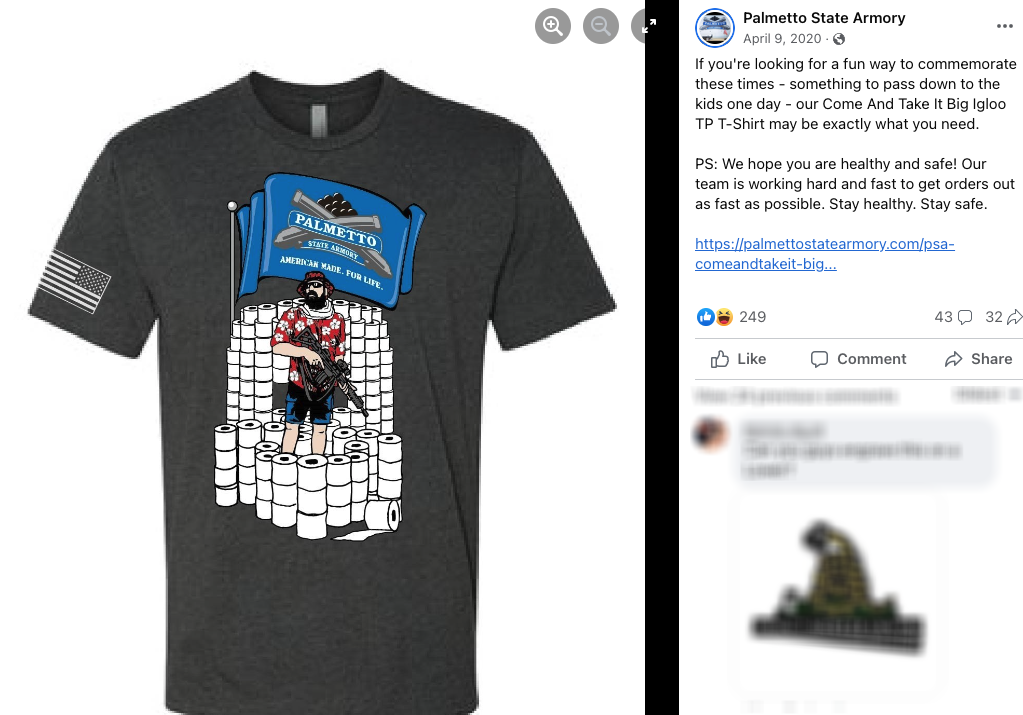
Some gun makers have even gone so far as stoking political divisions and culture wars to market their AR-15s on social media, even catering to extremists, such as boogaloo supporters, who see firearms as a way to gain power and overthrow the government.
BUILDING A GUN CULTURE AROUND AR-15s
These examples — and those included below — show how contemporary firearms marketing functions without resembling conventional advertisements. Someone scrolling through Instagram may encounter a manufacturer’s holiday greeting, a photograph reposted from another gun owner, an influencer’s rifle review, or even a political screen, all within the same feed, increasing a brand’s visibility and normalizing and reinforcing the cultural familiarity of AR-15s.
The evolution from hunting and tactical ads to social media content helps explain how the AR-15 became one of the most recognizable products in the American gun market. The industry did not rely on a single message to get there. Instead, manufacturers continually adapted their advertising to different audiences, emphasizing sporting uses, military credibility, masculinity, patriotism, personal defense, and lifestyle identity as circumstances changed. The rise of social media allowed those messages to circulate simultaneously, transforming the AR-15 from a product marketed through individual advertisements into a recurring presence within a much broader online culture.
MORE AR-15 MARKETING EXAMPLES